
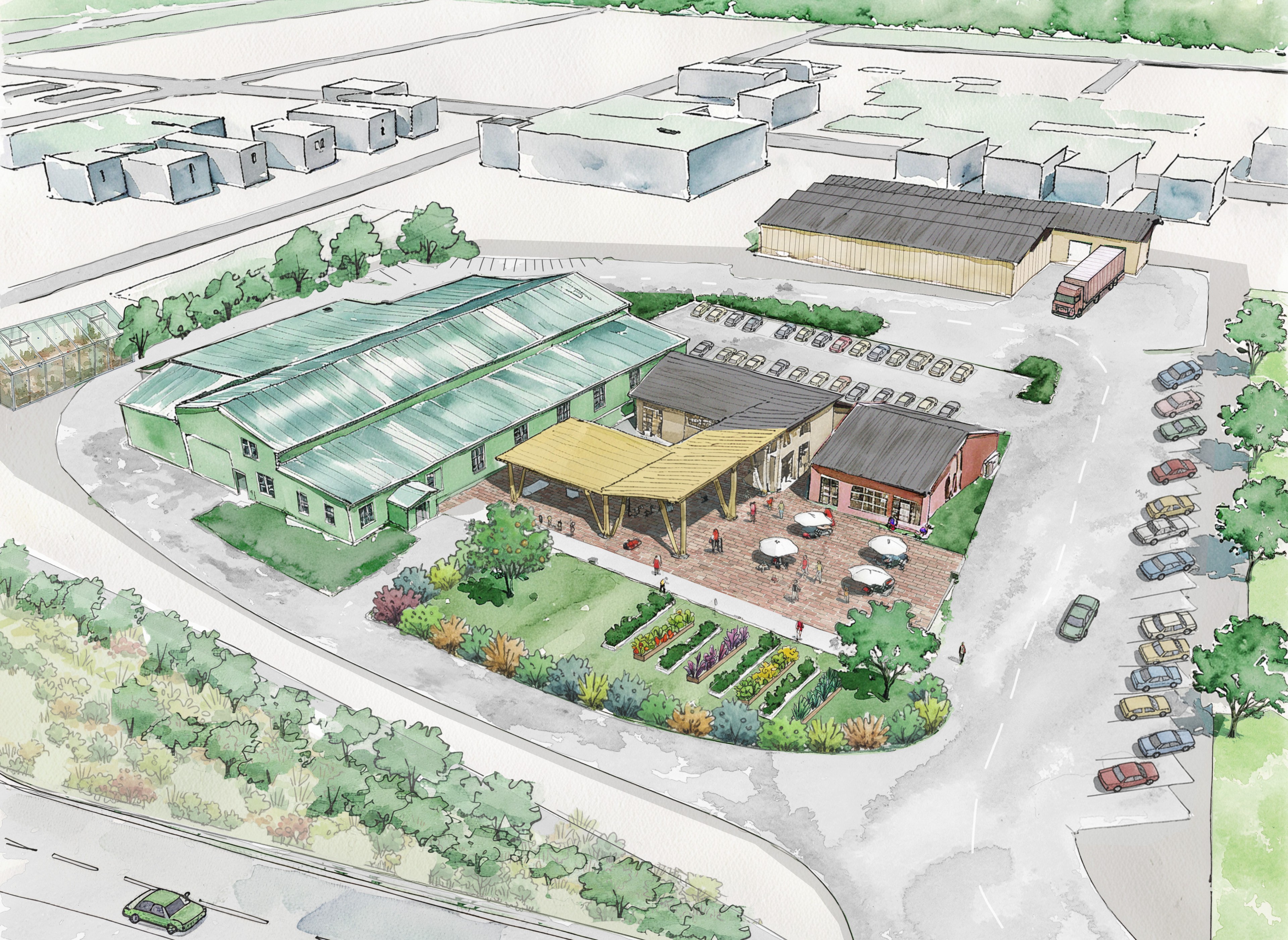
VFFC's Heart of Vermont Agriculture development project is addressing the region's need for agricultural infrastructure to support local farmers and value added food businesses to reach larger markets and innovate new products. We are rehabilitating existing facilities to create centralized food aggregation, storage, and distribution, as well as commercial kitchen and processing spaces for culinary education and value added food production. The project will turn VFFC into a truly regional food hub while providing more business opportunities and jobs for the Rutland area.
Our 2.93 acre campus, at 251 West Street in Rutland, Vermont is located on a former industrial site with four existing buildings, these facilities are being transformed into the Heart of Vermont Agriculture Food Hub within an Opportunity Zone adjacent to downtown Rutland.
Our Food Hub’s goal over the next five years is to help over 50 farm business and local food entrepreneurs generate $2 million dollars in annual sales by increasing profit margins and/or decreasing per unit costs and prepare students for the culinary job market.
Room to Grow
In fall 2026, VFFC launched its Room to Grow campaign to turn years of investment in campus infrastructure into meaningful, lasting impact across our local food system. Because even the best facilities need people and programs to bring them to life, the campaign invests in the staff, systems, and resources needed to activate our campus and realize its full potential.
● VFFC has built a foundation with $3.8M invested into physical infrastructure for food packing, storage, distribution, production, increased access, education, market and community space.
● The 2026-2028 “Room to Grow” campaign will complete this first phase of full campus activation: $500K - Capacity & Operations: increased staffing, technology, insurance, utilities, maintenance. $1.5M - Complete interior improvements, construct events pavilion, and renovate our administration building into a Food Retail Space.
● Projected Outcome: A revenue-diverse enterprise providing the infrastructure for agriculture to grow as a regional economic engine. Multiplier Effect: Farms and food businesses become more viable, create jobs and economic activity, and keep more food dollars circulating locally.
